10.2.07

...and Rightfully so

Putin Slams US for Making World More Dangerous | Europe | Deutsche Welle | 10.02.2007

Putin Slams US for Making World More Dangerous
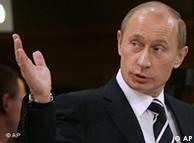
Russian President Vladimir Putin launched a full-frontal attack on the United States on Saturday, saying it had made the world a more dangerous place and left successive conflicts unresolved.

Addressing an audience of senior officials and politicians including many from the United States and the North Atlantic Treaty Organization (NATO), Putin said the United States had "overstepped" its borders with disastrous results.

The Russian leader, who spearheaded opposition to the 2003 invasion of Iraq by the United States and its allies, accused Washington of operating by "separate norms."

"The United States has overstepped its borders in all spheres -- economic, political and humanitarian and has imposed itself on other states," he told delegates at the 43rd Munich Conference on Security Policy.

"One-sided illegitimate action hasn't solved a single problem and has become a generator of many human tragedies, a source of tension," Putin said. "Local and regional wars didn't get fewer. The number of people who died didn't get less but increased significantly."
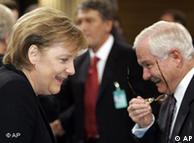

US Defense Minister Gates will likely respond to Putin when he speaks at MunichBildunterschrift: Großansicht des Bildes mit der Bildunterschrift: US Defense Minister Gates will likely respond to Putin when he speaks at Munich

The United States, he said, had gone "from one conflict to another without achieving a fully-fledged solution to any of them."

Putin also took aim at US plans to site a missile defense system close to Russia's border in NATO countries the Czech Republic and Poland, adding that any further enlargement of the alliance would be inappropriate.

"Why is it necessary to put military infrastructure on our border? It's hardly connected to today's global threats. What is the threat? Terrorism and fighting it," Putin said.

Analysts say that Russia's relations with the United States have deteriorated significantly under Putin, who has tried to restore Russia's prestige since the economic collapse that followed the Soviet Union's 1991 collapse.


Criticism from US delegates, Human Rights Watch

His speech got a frosty reception from US delegates in a question and answer session that followed his speech at this traditionally pro-Western forum.

US Democratic Congresswoman Jane Harmen charged that Russian experts had helped Iran develop an indigenous missile capability in the 1990s.

Putin denied that claim, saying Russia was "less involved than anyone" in such technology transfers.

He also rebuffed criticism of his country's human rights record by the head of the New York-based Human Rights Watch, Kenneth Roth.
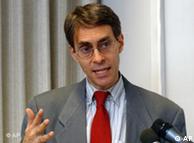

Roth is the first human rights activist to be invited to the Munich security conferenceBildunterschrift: Großansicht des Bildes mit der Bildunterschrift: Roth is the first human rights activist to be invited to the Munich security conference

Roth said the world was seeing an "increasingly uni-polar government in Russia, where competing centres of influence are being forced to toe the party line."

Putin responded that Russia was taking steps to stop foreign governments clandestinely using Russian non-governmental organizations (NGOs) to influence Russian policy.

On the subject of numerous killings of Russian journalists during his presidency, Putin turned the question back to the United States, saying that it was in Iraq that most journalists were killed doing their job.

Putin's comments were likely to be countered by subsequent speakers at the Munich conference, whose traditional theme is the future of NATO. Not least among these is to be US Defense Secretary Robert

Gates, who was due to make his first major speech since taking office.

DW staff / AFP (ncy

Russian Ultranationalist Leader Expects U.S. to Attack Iran in Late March - NEWS - MOSNEWS.COM

Russian Ultranationalist Leader Expects U.S. to Attack Iran in Late March - NEWS - MOSNEWS.COM

Don't act suprised.

A senior Russian parliamentary official and leader of the ultranationalist Liberal Democratic Vladimir Zhirinovsky believes that a U.S. attack on Iran is inevitable, he has told Ekho Moskvy radio station.

“The war is inevitable because the Americans (AMERICAN LEADERS- NOT CITIZENS) want this war,” he said. “Any country claiming a leading position in the world will need to wage wars. Otherwise it will simply not be able to retain its leading position. The date for the strike is already known — it is the election day in Israel (March 28). It is also known how much that war will cost,” Zhirinovsky said.

He went on to add that the publication of Prophet Muhammad cartoons in the European press was a planned action by the U.S. whose aim is “to provoke a row between Europe and the Islamic world”. “It will all end with European countries thanking the United States and paying, and giving soldiers,” he said. Russia should “choose a position of non-interference and express minimal solidarity with the Islamic world”, Zhirinovsky added. Um, I'm not sure about that one...

For his part, the head of the Centre for Strategic Studies of Religions and Modern World Politics, Maxim Shevchenko, also believes that a U.S. attack on Iran is very likely although he sees no preconditions for this war. “Iran does not threaten anyone, is not pointing its missiles at anyone. No Iranian leader has ever threatened to carry out a strike against the U.S. Therefore preparations for a war against Iran appear to be a global act of provocation,” he said.

In Shevchenko’s opinion, the reason behind “this barefaced promotion of a world war lies not in a conflict between the West and the Islamic World but in a fight for power in the world between US and European elites”. “The fate of humanity will be decided between a saber-rattling America and an allegedly democratic Europe,” Shevchenko concluded.

Whereas a senior research associate of the World Economy and International Relations Institute, Georgy Mirsky, is confident that “there will be no war”.

“The Americans got so very much stuck in Afghanistan and Iraq that they will not start a new war without definite proof of the fact that Iran poses a threat to the world. Besides, the U.S. has mid-term elections this year and the Republicans, who have suffered a severe blow to their trust, will not be able to win these elections if they drag the country into a new hazardous escapade.

”As for Israel, it can carry out a strike against Iran but only when it knows for certain that only one step remains before an Iranian atomic bomb is created. But that time has not come yet,“ Mirsky said.

9.2.07

The Pentagon's not-so-little secret

Feb. 8, 2007
As the president and Republicans continue to hype the surge -- and stifle debate about it -- Bush's own war planners are preparing for failure in Iraq. (hell-o!?)

By Sidney Blumenthal

Deep within the bowels of the Pentagon, policy planners are conducting secret meetings to discuss what to do in the worst-case scenario in Iraq about a year from today if and when President Bush's escalation of more than 20,000 troops fails, a participant in those discussions told me. None of those who are taking part in these exercises, shielded from the public view and the immediate scrutiny of the White House, believes that the so-called surge will succeed. On the contrary, everyone thinks it will not only fail to achieve its aims but also accelerate instability by providing a glaring example of U.S. incapacity and incompetence.

The profoundly pessimistic thinking that permeates the senior military and the intelligence community, however, is forbidden in the sanitized atmosphere of mind-cure boosterism that surrounds Bush. "He's tried this two times -- it's failed twice," Speaker of the House Nancy Pelosi said on Jan. 24 about the "surge" tactic. "I asked him at the White House, 'Mr. President, why do you think this time it's going to work?' And he said, 'Because I told them it had to.'" She repeated his words: "'I told them that they had to.' That was the end of it. That's the way it is."

On Feb. 2, the National Intelligence Council, representing all intelligence agencies, issued a new National Intelligence Estimate on Iraq, as harsh an antidote to wishful thinking as could be imagined. "The Intelligence Community judges that the term 'civil war' does not adequately capture the complexity of the conflict in Iraq, which includes extensive Shia-on-Shia violence, al-Qaida and Sunni insurgent attacks on Coalition forces, and widespread criminally motivated violence. Nonetheless, the term 'civil war' accurately describes key elements of the Iraqi conflict, including the hardening of ethno-sectarian identities, a sea change in the character of the violence, ethno-sectarian mobilization, and population displacements."

The report described an Iraqi government, army and police force that cannot meet these challenges in any foreseeable time frame and a reversal of "the negative trends driving Iraq's current trajectory" occurring only through a dream sequence in which all the warring sects and factions, in some unexplained way, suddenly make peace with one another. Nor does the NIE suggest that this imaginary scenario might ever come to pass. Instead, it proceeds to describe the potential for "an abrupt increase in communal and insurgent violence and a shift in Iraq's trajectory from gradual decline to rapid deterioration with grave humanitarian, political, and security consequences."

Bush justified his invasion on the basis of false intelligence in the now notorious NIE of October 2002 that claimed Saddam Hussein possessed weapons of mass destruction. Now, as the latest NIE forecasts nightmares, he is escalating the war. But almost everything has changed in the nearly four years since the invasion.

A newly elected Congress has been galvanized to debate a bipartisan resolution disapproving of Bush's escalation. Yet in the Senate, where 60 votes are necessary to establish cloture on a filibuster, the Republican minority has blocked a vote. Though many Republicans are keenly aware that continued support for Bush's policy amounts to political suicide in 2008, all but two of them have joined a phalanx to shut down the vote. By mustering behind him, they tie their fate to his policy. Bush, however, will be gone, while they remain exposed to the political elements.

Even Sen. John Warner of Virginia, the Republican cosponsor of the resolution against the escalation along with Sen. Carl Levin, D-Mich., cast his lot with the Republican martyr brigade, voting to suppress his own measure. In 2002, the Republican right mounted a primary campaign against Warner in retribution for his deviation from their ideological line, but failed feebly. Warner cannot fear a repetition of the right's vengeance. Can he be undermining himself out of deference to the authority of a commander in chief whose course he believes is reckless?

The Republican prevention of a vote on the Warner-Levin resolution reflects an effort to close debate on the war itself. It amounts in effect to a gag rule on Bush's Iraq policy. During the Vietnam War, under President Johnson, neither party attempted to shut down debate. After 1969, President Nixon's Vietnam policy consisted of misdirection, deception, covert action and fait accompli, such as the counterproductive and ultimately catastrophic invasion of Cambodia. The Bush administration's methods can be traced to the Nixon administration, with Dick Cheney as the connecting thread.

The reception of the latest NIE, even more than the NIE itself, indicates again Bush's and Republicans' denial of objective analysis from the professional intelligence community. The October 2002 NIE was produced under intense pressure from the White House, especially Vice President Cheney, to validate its preconceived views. "The administration used intelligence not to inform decision-making, but to justify a decision already made," Paul Pillar, the national intelligence officer for the Middle East who oversaw the assembling of that NIE, wrote a year ago. In the shadow of this travesty, the new NIE was written with great care; its frightening descriptions, therefore, should be considered to be deliberately guarded and reserved in tone.

Just as Bush and the Republicans rejected the bipartisan wise men of the Baker-Hamilton Commission, they have now rejected the objective assessment of the professionals. By thwarting the bipartisan Warner-Levin resolution, they have declared that they will operate on their own fanciful criteria, even against their own political interests.

As the Senate curdles in frustration over Republican tactics, the trial of Scooter Libby continues to clarify the degree to which the administration covered up its disinformation campaign that led the country into war with another disinformation campaign to cover up the role of the vice president as the prime mover of the smear campaign against former ambassador Joseph Wilson for committing the unforgivable act of revealing the truth. For the Senate Republicans, Scooter Libby is not an object lesson. The lesson they take away, if any, is not the necessity of open government but once again the need to burn the tapes.

Libby's effort to prevent his grand jury tapes from being entered into evidence in his trial resembled nothing so much as Nixon trying to suppress his tapes. Both in the end revealed their respective coverups. Cheney learned from Nixon to burn the tapes at least figuratively; now, his chief of staff, Cheney's Cheney, has tried to protect Cheney by literally and futilely suppressing the tapes. Cheney finds himself back at the beginning. For him, life has come full circle. From the entire history of deception, from the Nixon to the Libby tapes, the Republicans have learned nothing.

The new NIE offers more than "key judgments" on "The Prospects for Iraq's Stability." It is also a template for the short-term future of American politics. The ruthlessly cruel events projected for Iraq will blow back to the United States. The more Bush fights there, the more the embattled Republicans must fight here.

The Senate Republicans' vote to suppress the resolution on the war was the moment when they irrevocably aligned themselves completely with a president who rejects objective analysis. Unable to shield him or themselves from the inevitable consequences, they have made a conscious decision to place the president's delusions above the welfare not only of the Republican Party but also of the troops sent into the deadly labyrinth of Baghdad. Quietly and calmly, as the Republicans hype the "surge," the war planners prepare for the worst.

3.2.07

German Chancellor Arrives for Talks in Egypt


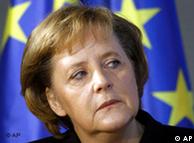
German Chancellor Merkel left on Saturday for a four-day trip to Egypt, Kuwait, Saudi Arabia and the United Arab Emirates. Topping the agenda are the situation in Iraq, Iran and the Israeli-Palestinian conflict.

Over the past six weeks, Angela Merkel has already met with Israeli Prime Minister Olmert, president of the Palestinian autonomous authority Abbas and Jordanian King Abdullah II. The forthcoming trip to the Gulf region -- during which she will visit four countries in four days -- will be the German chancellor's first longer trip after 14 months in office.

Merkel has received assurances from US President George W. Bush that the United States will again strengthen their involvement in the peace negotiations between Israel and Palestine. On Friday, one day before Merkel's trip to the Gulf, the Middle-East Quartet -- consisting of the US, Russia, the EU and the UN -- met again for the first time in a year.

While former German Chancellor Gerhard Schröder made economic ties the focus of his trips to the Middle East, "political topics will clearly stand in the foreground" during Merkel's talks, said government spokesperson Thomas Steg.

Political agenda

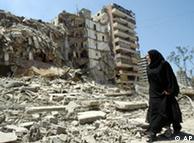
A woman walking through rubble in a suburb of BeirutBildunterschrift: Großansicht des Bildes mit der Bildunterschrift: Lebanon is still recovering from the war with Israel

Germany's economics minister, Michael Gloss, is also traveling to the region together with a delegation of business leaders, but their routes will overlap only occasionally.

"The chancellor would like the countries in the region to feel responsible and participate in conflict resolution," Steg said.

There are already enough conflicts in the Middle East: While Lebanon's moderate government is fighting for stability, Iran is causing alarm with its nuclear plans, and Palestinian rival movements Hamas and Fatah are involved in a power struggle that has -- since the escalation of violence -- cost 60 lives.

"The essential historical conflict, however, remains to be the one between Israel and Palestine," said Middle East expert Christian-Peter Hanelt. "If this conflict gets resolved, this will have a positive effect on the whole region."

A stabilizing role

Technicall staff at an Iranian uranium conversion facilityBildunterschrift: Großansicht des Bildes mit der Bildunterschrift: Iran's nuclear plans are causing concern in the region

It's become clear in the last few months that moderate Gulf countries can play an important role for the stabilization of the Middle East.

"They are now showing more clearly that they are ready to assume responsibility," Hanelt said.

The Saudi royal family exerted positive influence, for instance, during the Hezbollah general strike in Lebanon.

"In his talks with the Iranian leaders, their special envoy prevented the escalation of the general strike," Hanelt said.

Together with Egypt, Saudi Arabia offered earlier this week to mediate in the inner-Palestinian conflict.

Similar interests

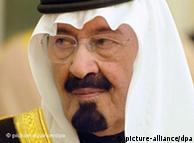
Saudi Arabian's King Abdullah Bin Abdulaziz Al Saoud Bildunterschrift: Großansicht des Bildes mit der Bildunterschrift: Saudi Arabian's King Abdullah is important for Angela Merkel's Middle East initiative

According to Günter Meyer, who heads the Mainz-based Center for Research on the Arab World, the Saudi King Abdullah will be a particularly important negotiating partner for Merkel because Germany and Saudia Arabia have similar interests, especially vis-à-vis Iran.

"Since Iran is no longer militarily kept at bay by Iraq, the Saudis are increasingly seeing a threat in Iran because of their ideological differences," Meyer said.

Iran is ruled by Shiite Moslems, whereas the Saudis are mostly Sunnites.

"The fact that she is the Council President of the whole European Union will strengthen her position during this trip," Meyer said.

In her talks with King Abdullah II last week in Berlin, Merkel spoke about taking advantage of the existing "window of opportunity for the peace process." After her trip to the Middle East, she'll know a little better if she was right about it.

Mareike Aden

1.2.07

Defense Facilities Pass Along Reports of Suspicious Activity

'Raw Information' From Military, Civilians Is Given to Pentagon

By Walter Pincus
Washington Post Staff Writer
Sunday, December 11, 2005; A12

Day after day, reports of suspicious activity filed from military bases and other defense installations throughout the United States flow into the Counterintelligence Field Activity, or CIFA, a three-year-old Pentagon agency whose size and budget remain classified.

The Talon reports, as they are called, are based on information from civilians and military personnel who stumble across people or information they think might be part of a terrorist plot or threat against defense facilities at home or abroad.

The documents can consist of "raw information reported by concerned citizens and military members regarding suspicious incidents," said a 2003 memo signed by then-Deputy Defense Secretary Paul D. Wolfowitz. The reports "may or may not be related to an actual threat, and its very nature may be fragmented and incomplete," the memo said.

The Talon system is part of the Defense Department's growing effort to gather intelligence within the United States, which officials argue is imperative as they work to detect and prevent potentially catastrophic terrorist assaults. The Talon reports -- how many are generated is classified, a Pentagon spokesman said -- are collected and analyzed by CIFA, an agency at the forefront of the Pentagon's counterterrorism program.

The Pentagon's emphasis on domestic intelligence has raised concerns among some civil liberties advocates and intelligence officials. For some of them, the Talon system carries echoes of the 1960s, when the Pentagon collected information about anti-Vietnam War groups and peace activists that led to congressional hearings in the 1970s and limits on the types of information the Defense Department could gather and retain about U.S. citizens.

"I am particularly apprehensive about the expansion of our military's role in domestic intelligence gathering," said Washington lawyer Richard Ben-Veniste, a member of the Sept. 11 commission at that panel's final news conference last week, noting that Congress has yet to pay attention to the Talon program. The Pentagon's collection of data, he said, was a "cause for concern," partly because little is known about it publicly.

"Programs such as CIFA, Eagle Eyes and Talon -- names unfamiliar to most Americans -- must receive robust scrutiny by Congress and the media," Ben-Veniste said.

CIFA, according to a Pentagon background paper provided to The Washington Post in response to inquiries, has established standards for Talon reports and handling that "meet intelligence oversight requirements." The statement said "U.S. person information" -- reports concerning people in the United States -- "is collected and retained only as authorized" by presidential executive order.

Spokesmen for the FBI, Director of National Intelligence John D. Negroponte and the National Counterterrorism Center all said their principals would not comment on CIFA's Talon activities.

Talon, which stands for "threat and local observation notice," captures raw information about "anomalies, observations that are suspicious . . . and immediate indicators of potential threats to DoD [Defense Department] personnel and or resources," according to an attachment to Wolfowitz's memo.

Talon reports grew out of a program called Eagle Eyes, an anti-terrorist program established by the Air Force Office of Special Investigations that "enlists the eyes and ears of Air Force members and citizens in the war on terror," according to the program's Web site. A Pentagon spokesman recently described Eagle Eyes as a "neighborhood watch" program for military bases. The Air Force inspector general newsletter in 2003 said program informants include "Air Force family members, contractors, off-base merchants, community organizations and neighborhoods."

In the period after Sept. 11, 2001, an intelligence and security panel working under sponsorship of the Joint Staff adopted Talon to be the Defense Department reporting system "to assemble, process and analyze suspicious activity reports to identify possible terrorist pre-attack activities," according to the background paper.

CIFA, which was created in February 2002, was given responsibility for analyzing the Talon reports. CIFA was originally asked to coordinate policy and oversee the counterintelligence activities of the Air Force, Army, Navy, Marine Corps and Defense agencies such as the National Security Agency, the Defense Intelligence Agency and the National Geospatial-Intelligence Agency. CIFA's initial role also included the establishment of the common standards for training and collection of data.

Since that time, under its director, David A. Burtt II, CIFA has rapidly expanded its mandate inside the United States as the Pentagon's domestic intelligence activities have grown since Sept. 11.

It is unclear how many Talon reports are filed each year. But just one of the military services involved in the program, the Air Force, generated 1,200 during the 14 months that ended in September 2003, according to the inspector general's newsletter.

Among the types of information worth recording, according to a Talon report guide that accompanied the Wolfowitz memo, are threats or incidents that "may indicate a potential for a threat . . . whether the threat posed is deliberately targeted or collateral." Another trigger for reporting would be attempts by individuals to monitor U.S. facilities, including the taking of pictures, annotating maps or drawings of facilities, use of binoculars "or other vision-enhancing devices" or attempts to obtain "security-related or military specific information."

Other categories for reports were attempts to acquire badges, passes or theft of materials that could be used to manufacture false identification cards or thefts of military uniforms.

A former senior CIA official with wide counterintelligence experience, who is familiar with CIFA's growth, said the agency's mandate is "ambiguous, but the Defense Department is using its assets in its broadest terms." He added that efforts such as Talon "could be a well-intentioned effort and it could develop important information." But, he said that in his view, "the Pentagon has chosen to err on the side of over-collection" of information.

His concern, he said, was who does the intelligence "go to, and what do they do with it."

31.1.07

German court issues arrest warrants for 13 CIA agents - International Herald Tribune

German court issues arrest warrants for 13 CIA agents - International Herald Tribune

BERLIN: Prosecutors in Munich on Wednesday obtained warrants for 13 CIA agents allegedly involved in the kidnapping of a German citizen, Khaled el-Masri.

Christian Schmidt-Sommerfeld, the Munich prosecutor, said the warrants had been issued by a local court this week, but it is unclear if the German authorities will be able to have the U.S. agents extradited to Germany.

The warrants could prove embarrassing and even politically damaging for Germany's Foreign Minister, Frank-Walter Steinmeier.

Steinmeier was chief of staff for the former chancellor, Gerhard Schröder, whose coalition government of Social Democrats and Greens had been in power at that time and had taken a tough stance against the U.S. war on terror. After repeatedly denying any knowledge of the Masri case, Steinmeier last year admitted that he had been informed about the case.

Steinmeier is also under pressure to reveal exactly what his role was in allegedly preventing the release and return to Germany of Murat Kurnaz, a German-born Turkish citizen who had been arrested in Afghanistan in 2001, sent to Afghanistan — where he said he had been abused by German security agents — and then transferred to Guantánamo Bay.

According to Kurnaz's lawyer, the United States had offered to release Kurnat if the German authorities provided strict security measures, including round-the-clock surveillance. The German government refused to accept those terms, and he was finally returned to Germany in August 2006 after Chancellor Angela Merkel demanded his release.

The CIA agents are accused of kidnapping and inflicting bodily harm on Masri, who was abducted in the former Yugoslav republic of Macedonia in December 2003.

He said that he was drugged, beaten and then flown by the CIA to a detention center in Afghanistan. Masri said he was held there for five months before the U.S. government flew him to Albania and left him there.

Masri, a Muslim of Lebanese origin who lives in southern Germany, is suing the U.S. authorities for damages.

According to a report by the Spanish authorities, Masri was kidnapped by the group of 13 CIA agents who were traveling aboard a Boeing 737. The plane left Mallorca on Jan. 23, 2004, picked up Masri in Macedonia and continued on to Afghanistan.

29.1.07

The Raw Story | Morgan Stanley charged with using '9/11 smokescreen' to hide e-mails

The Raw Story | Morgan Stanley charged with using '9/11 smokescreen' to hide e-mails

In a disciplinary complaint, the National Association of Securities Dealers (NASD) alleges that Morgan Stanley used a "9/11 smokescreen" to hide e-mails sought by angry claimants in numerous arbitration proceedings from October 2001 through March 2005.

The securities industry's self-regulating arm accuses Morgan Stanley of "falsely claiming that millions of emails it possessed had been lost in the Sept. 11, 2001 terrorist attacks on the World Trade Center in New York, where its email servers were housed."

"In fact, according to the complaint, Morgan Stanley possessed millions of pre-September 11 emails that had been restored to its system shortly after September 11 using back-up tapes," stated an NASD press release obtained by RAW STORY. "Many other emails were maintained on individual users’ computers and were therefore never affected by the attacks, yet Morgan Stanley often failed to search those computers when responding to requests."

According to NASD, "Morgan Stanley later destroyed many of the emails it did possess, in two ways – by overwriting backup tapes that had been used to restore the emails to the firm’s system and by allowing users of the firm’s email system to permanently delete the emails over an extended period of time."

The complaint alleges that "millions of the emails were destroyed" between September 2001 and March 2005.

The security firm is further accused of failing to implement procedures providing for the retention of email, and failing to adopt adequate procedures governing searches for email in response to requests by regulators and in arbitration proceedings.

"Morgan Stanley responded that it has tried to reach a 'fair and appropriate' settlement of the NASD complaint, but the regulator made 'disproportionate and unprecedented demands,'" CNN reports. "As a result, it will litigate the matter, Morgan Stanley said."

Anti-First Amendment S.1 Passes Congress

It was bad enough George Bush Senior found it necessary to blame bloggers for creating what he deems an “adversarial and ugly climate” (never mind his particular bit of ugliness in Iraq more than a decade ago, eventually resulting in the murder of more than a million people), last month we had the Manchurian candidate, John McCain, introducing legislation “that would fine blogs up to $300,000 for offensive statements, photos and videos posted by visitors on comment boards, effectively nixing the open exchange of ideas on the Internet, providing a lethal injection for unrestrained opinion, and acting as the latest attack tool to chill freedom of speech on the world wide web,” as Paul Joseph Watson writes for Prison Planet.

Since Watson wrote his piece about McCain’s anti-First Amendment bill, Richard A. Viguerie has warned that Congress is attempting the silence bloggers and other critics of the government. “We have the First Amendment right to speak and urge citizens to contact Washington—without the intimidation inherent in federal regulation of our activities.”

Of course, as a Republican partisan, Viguerie concentrates on Pelosi and the Democrats while quite naturally ignoring Bush and the neocons. But even so, his warning about Section 220 of S. 1, a lobbying reform bill that went before the Senate should not go unheeded—it will “require grassroots causes, even bloggers, who communicate to 500 or more members of the public on policy matters, to register and report quarterly to Congress the same as the big K Street lobbyists. Section 220 would amend existing lobbying reporting law by creating the most expansive intrusion on First Amendment rights ever. For the first time in history, critics of Congress will need to register and report with Congress itself,” according to Viguerie.

It’s comical, in a perverse sort of way, that Democrats and Republican—turn them upside down, they all look the same—are “bitterly split on … how to clean up the scandal-rocked U.S. Congress,” according to the Washington Post. Never mind that Congress is basically a whorehouse of corporate and political special interests and such a bill would not touch most of them.

Republicans are not opposed to the “bipartisan bill to revamp the Senate’s ethics and lobbying rules” because it is a slap in the face to the First Amendment, but rather because they want to include a “line item veto” provision that would further consolidate Bush’s unitary decidership. “Attaching an unrelated measure to this bipartisan bill is an obvious attempt to derail passage of the strongest ethics reform legislation,” complained Democrats Russ Feingold and Barack Obama, the presidential wanna-be.

As noted here last week, Democrats made sure to set up a special loophole, called an “ethics exemption,” for their friends. “A major loophole in the Democrats’ recently unveiled ethics package will allow non-profit arms of controversial lobbying organizations to fund travel excursions for members of Congress,” Raw Story reported earlier this month. Pelosi and crew designed this “loophole” specifically for AIPAC and the Aspen Institute, a Rockefeller and Carnegie globalist crime syndicate.

Not that opposition matters. “The Senate, responding to voter frustration with corruption and special interest influence in Washington, on Thursday overwhelmingly approved far-reaching ethics and lobbying reform legislation,” reports Time. “Under the bill, passed 96-2, senators will give up gifts and free travel from lobbyists, pay more for travel on corporate jets and make themselves more accountable for the pet projects they insert into bills.”

No mention here of the fact “Pelosi & Company’s lobbying legislation ‘reform’ would define political communications to and even between citizens as ‘lobbying.’ This turns the definition of lobbying on its head and is in violation of the First Amendment,” according to Viguerie. “Moreover, their legislation would treat grassroots activists more harshly than the K Street lobbyists and the big corporations and unions. They get loopholes that the smallest critics using the Internet wouldn’t enjoy. Communicating to as few as 500 people would trigger the registration and quarterly reporting to Congress…. In truth, the grassroots legislation would help protect corruption in Washington by silencing critics and diminishing the ability of grassroots causes to communicate with the general public.”

But the Democrats, portrayed as our saviors during the last election cycle, are not finished. “As the new Democratic majority continues its 100-hour legislative blitz in the U.S. House, one Democrat has quietly reintroduced controversial legislation that would give the federal government more authority over so-called ‘hate crimes,’” the Cybercast News Service reported on January 16. “This is the most dangerous legislation ever to come before Congress,” warns Rev. Ted Pike. “It leads directly to an end of free speech. Once free speech is gone, there is little to prevent the loss of all our other freedoms. The new Democrat-controlled Congress has all the votes it needs to quickly run this Orwellian bill through committee in the House and Senate and pass it.”

In 1936, Nikolai Bukharin crafted the Soviet Constitution, which promised freedom of speech, freedom of assembly, freedom of the press, freedom of religious worship, and the inviolability of individuals, their home and the privacy of their correspondence. Stalin claimed to support the constitution, even as he arrested thousands of dissidents opposed to the government. In total, millions of people were imprisoned and killed, most of them for opposing Stalin, including Nikolai Bukharin, the founder of the Soviet Constitution.

In America, the government claims to uphold the Constitution and the Bill of Rights while passing legislation designed to curtail if not eliminate our liberty. Is it possible, in the months ahead, as both Pike and Viguerie warn, the government will, under the direction of a Democrat Congress, begin a momentous process that may eventually result in the sort of massive crimes Stalin inflicted on the people of the Soviet Union?

23.1.07

Group Says al-Qaida No. 2 Mocks Bush

He's in the majority. Most people except a handful of BLIND (not literally blind- figuratively blind american's ) Most of us mock Bush.

Group Says al-Qaida No. 2 Mocks New U.S. Surge Strategy for Iraq in New Videotape

Ayman al-Zawahri speaks to the press in this 1998 photo taken in Khost, Afghanistan and made available Friday March 19, 2004. Al-Qaida's deputy leader mocked President Bush's plan to send 21,000 more troops to Iraq, challenging him to send "the entire army," according to a new al-Qaida videotape released Monday by a U.S. group that tracks terror messages. (AP Photo/Mazhar Ali Khan, FILE)

By NADIA ABOU EL-MAGD

CAIRO, Egypt Jan 23, 2007 (AP)— Al-Qaida's deputy leader mocked President Bush's plan to send 21,000 more troops to Iraq, challenging him to send "the entire army," according to a new al-Qaida videotape released Monday by a U.S. group that tracks terror messages.

Excerpts from the video were distributed by the Washington-based SITE Institute, which said it had intercepted the footage of Ayman al-Zawahri. The tape had not yet been posted on Islamic militant Web sites, where his messages are usually placed.

Al-Zawahri said the U.S. strategy for Iraq, outlined by Bush in a Jan. 9 speech, was doomed to fail.

"I ask him, why send 20,000 (troops) only why not send 50 or 100 thousand? Aren't you aware that the dogs of Iraq are pining for your troops' dead bodies?" said al-Zawahri in the footage released by SITE, an independent group that researches and analyzes terror-related intelligence.

"So send your entire army to be annihilated at the hands of the mujahideen (holy warriors) to free the world from your evil," he said, "because Iraq, land of the Caliphate and Jihad, is able to bury ten armies like yours, with Allah's help and power." (Hey, let's all say thanks to america for creating the mujahideen)

In the video which showed al-Zawahri in a full gray beard and wearing a white turban, in front of a black backdrop Osama bin Laden's top lieutenant said it was the "duty" of all Muslims to take up arms against the enemies of Islam or support those who do.

SITE did not elaborate on how it received the video and it wasn't immediately possible to confirm its authenticity. U.S. intelligence had no immediate comment. CIA normally analyzes tapes once they air to determine whether they are authentic.

In the excerpt about 90 seconds from the 14-minute tape the Egyptian militant appeared more sedate than in past videos, not wagging his finger as he often does.

The message was the first reaction from al-Qaida's leadership to the new Iraq strategy. The U.S. has said the extra troops aim to crack down on al-Qaida fighters and other Sunni Arab insurgents in Iraq, as well as Shiite militiamen blamed in the country's spiraling sectarian violence=violence=violence=violence=violence.

And all the people said BU*SH*IT!

7.1.07

EDWIN STARR lyrics - War

EDWIN STARR lyrics - War

War, huh, yeah
What is it good for
Absolutely nothing
Uh-huh
War, huh, yeah
What is it good for
Absolutely nothing
Say it again, y'all

War, huh, good God
What is it good for
Absolutely nothing
Listen to me

Ohhh, war, I despise
Because it means destruction
Of innocent lives

War means tears
To thousands of mothers eyes
When their sons go to fight
And lose their lives

I said, war, huh
Good God, y'all
What is it good for
Absolutely nothing
Say it again

War, whoa, Lord
What is it good for
Absolutely nothing
Listen to me

War, it ain't nothing
But a heartbreaker
War, friend only to the undertaker
Ooooh, war
It's an enemy to all mankind
The point of war blows my mind
War has caused unrest
Within the younger generation
Induction then destruction
Who wants to die
Aaaaah, war-huh
Good God y'all
What is it good for
Absolutely nothing
Say it, say it, say it
War, huh
What is it good for
Absolutely nothing
Listen to me

War, huh, yeah
What is it good for
Absolutely nothing
Uh-huh
War, huh, yeah
What is it good for
Absolutely nothing
Say it again y'all
War, huh, good God
What is it good for
Absolutely nothing
Listen to me

War, it ain't nothing but a heartbreaker
War, it's got one friend
That's the undertaker
Ooooh, war, has shattered
Many a young mans dreams
Made him disabled, bitter and mean
Life is much to short and precious
To spend fighting wars these days
War can't give life
It can only take it away

Ooooh, war, huh
Good God y'all
What is it good for
Absolutely nothing
Say it again

War, whoa, Lord
What is it good for
Absolutely nothing
Listen to me

War, it ain't nothing but a heartbreaker
War, friend only to the undertaker
Peace, love and understanding
Tell me, is there no place for them today
They say we must fight to keep our freedom
But Lord knows there's got to be a better way

Ooooooh, war, huh
Good God y'all
What is it good for
You tell me
Say it, say it, say it, say it

War, huh
Good God y'all
What is it good for
Stand up and shout it
Nothing
Photobucket