21.8.09

Exclusive Interview with FBI Whistleblower Sibel Edmonds | Armenian Weekly

Exclusive Interview with FBI Whistleblower Sibel Edmonds | Armenian Weekly

Sibel Edmonds

Sibel Edmonds

On April 23, 2007, I sat down in Washington, D.C. with FBI whistleblower Sibel Edmonds for an extensive interview, which was published in the Armenian Weekly and on ZNet and widely circulated. On Aug. 18, 2009, I conducted a follow-up phone interview with Edmonds, who was visiting New Zealand. The interview is an overview of what has transpired in her case since 2007, with emphasis on her deposition in the Schmidt vs. Krikorian case in Ohio earlier this month.

Edmonds, an FBI language specialist, was fired from her job with the FBI’s Washington Field Office in March 2002. Her crime was reporting security breaches, cover-ups, blocking of intelligence, and the bribery of U.S. individuals including high-ranking officials. The “state secrets privilege” has often been invoked to block court proceedings on her case, and the U.S. Congress has even been gagged to prevent further discussion.Edmonds uncovered, for example, a covert relationship between Turkish groups and former Speaker of the House Dennis Hastert (R-Ill.), who reportedly received tens of thousands of dollars in bribes in return for withdrawing the Armenian Genocide Resolution from the House floor in 2000.

Born in Iran in 1970, Edmonds received her BA in criminal justice and psychology from George Washington University, and her MA in public policy and international commerce from George Mason University. She is the founder and director of the National Security Whistleblowers Coalition (NSWBC) and in 2006 received the PEN/Newman’s Own First Amendment Award. She speaks Turkish, Farsi, and Azerbaijani.

Below is the full transcript of the follow-up interview.

***

Khatchig Mouradian—I asked you in 2007 what had changed during the five years since 2002, when you first contacted the Senate Judiciary Committee to reveal the story on Turkish bribery of high-level U.S. officials. You said, “There has been no hearing and nobody has been held accountable. We are basically where we started…” Two more years have passed, we have a new president, and I have to ask the same question again. Has there been any change?

Sibel Edmonds—Nothing has changed. As far as the Congress is concerned, the Democrats have been the majority since November 2006 and I have had zero interest from Congress on having hearings—any hearings—on this issue, whether it’s the states secrets privilege portion of it or the involved corruption cases. The current majority has been at least as bad as the previous one. At least the Republicans were gutsy enough to come and say, We’re not going to touch this. But the new majority is not saying anything!

The Obama Administration is pretty new. For what I see, they are continuing the previous administration’s state secrets privilege policies. As far as the whistleblower protection and related legislations are concerned, the new White House has already made it clear that they do not want to provide any protection for national security whistleblowers—these are the whistleblowers from the FBI, CIA, and all the other intelligence and law enforcement agencies and, of course, the Defense Department.

As far as the mainstream media is concerned, at least from what I have seen, the situation has actually gotten worse. To me that seems to be the major reason behind the Congress’ and the White House’s inaction and lack of desire to pursue accountability. As long as the pressure from the mainstream media is not there, of course they aren’t going to act. They are driven by that pressure, and the mainstream media in the U.S. today does not fulfill its role and responsibility by providing that pressure.

Of the three—Congress, the executive branch, and the media—I would say the biggest culprit here is the mainstream media.

K.M.—The most recent example of the deafening silence of the mainstream media was your deposition during the Schmidt vs. Krikorian case on Aug. 8. There, you spoke, under oath, about how the Turkish government and a network of lobby groups and high-ranking U.S. officials and Congressmen have engaged in treason and blackmail. A big story by any standards, it was only covered by Armenian newspapers and a few blogs. How do you explain this silence?

S.E.—I know field reporters who are so excited and want to chase the story. But when they went to their papers—and I’m talking about mainstream media and very good investigative journalists—their editors are refusing to touch it. When you watch the video or read the transcript, you will see how explosive the deposition was. And remember, I was speaking under oath. If by any standard, if I were to lie or be untruthful in any way, I would go to jail. I am answering these questions under oath, and yet, the mainstream media is refusing to touch it. And this is very similar to what we saw with the AIPAC/Larry Franklin case.

I have emphasized the fact that the American Turkish Council [ATC], the Turkish lobby, and these Turkish networks, they work together, in partnership with AIPAC [American Israel Public Affairs Committee] and JINSA [Jewish Institute for National Security Affairs]. So not only is there pressure on media outlets from the Turkish lobby and the corrupt U.S. persons involved, but they also have this pressure placed on the media via their partners from the Israel lobby—and the latter’s influence on the mainstream media in the U.S. is undeniable.

The irony is that my deposition has made it to the front page of Turkish newspapers—and Turkey doesn’t even pride itself with freedom of the media—yet the mainstream media has not written a single word about it.

K.M.—In an article you wrote about the 4th of July titled, “It Ain’t about Hot Dogs and Fireworks,” you say: “Recall the words of the Constitution Oath that all federal employees, all federal judges, all military personnel, all new citizens are required to take, step back, and pay special attention to these lines: ‘support and defend the Constitution and laws of the United States of America against all enemies—foreign and domestic.’ Now ask yourself who is meant by ‘domestic’ enemies.”

Talk about these “domestic enemies.”

S.E.—The domestic enemies I refer to are the U.S. officials, whether elected or appointed, who do not represent the interest of the American people—whether they are national security or foreign policy-related interests—and instead, they represent their own greed, their own financial benefit and/or foreign interests. A good example here is Dennis Hastert.

Less than three years after Vanity Fair ran a story about Hastert’s covert relationship with Turkish groups, Hastert’s group announced that it’s the registered lobbyist for the government of Turkey receiving, $35,000 a month from the Turkish interests. How much more vindication does the American mainstream media want? This man, for years, cashed in while he was under oath to be loyal and represent American interests and the Constitution. While in Congress, this man was not only representing foreign governments, but also foreign criminal entities. As soon as this man got out of Congress, he came out of the closet and officially became a representative of foreign interests. Bob Livingston [a former Republican Congressman from Louisiana] is another example. As soon as he got out of Congress, he registered under FARA [Foreign Agents Registration Act] to represent foreign interests. Steven Solarz [a former Democratic Congressman from New York] is yet another example.

Another prominent example is Mark Grossman at the State Department. For years, he has been representing foreign entities. In fact, he’s been violating criminal laws in the U.S. And guess what? He leaves the State Department in 2005 and he’s immediately placed on the payroll by a company in Turkey called Ihlas Holding, and he goes and joins a lobby and starts representing Turkish entities’ interests.

These opportunities do not come when these people leave their offices. In order for these people to secure these jobs and lucrative payments, they have to serve these foreign entities while they are in office. And they have done just that!

The victims here are the American people, their national security, and the integrity of this government. And in many cases that I know about, it is about our national security-related, intelligence-related information that is being easily provided to foreign entities by these individuals. Based on the laws we have since the beginning of this nation, these people should be prosecuted criminally.

K.M.—I am reminded of the saying, “God protect me from my friends, and I’ll take care of my enemies.” Isn’t Turkey supposed to be an ally of the U.S.?

S.E.—If you were to go and see our government’s own latest report, under the espionage section, the top countries are Israel, China, with Turkey coming third or fourth. You are looking at two ally countries here, Israel and Turkey, penetrating and stealing our intelligence, military, and classified technology information. Why would your allies penetrate your State Department, Department of Defense, and get away with it? Why would your allies want to steal from you?

K.M.—Let’s talk about the Krikorian vs. Schmidt case. Specifically, why did you decide to testify and what can you say about the efforts to block your testimony?

S.E.—I was contacted by Mr. Krikorian’s attorneys, who said they wanted to receive my sworn testimony and also depose me as a witness on the case they had in court. I went and checked out their case, and I saw that it involves the Turkish lobby and certain Turkish interest groups, and also, a Representative, Jean Schmidt [R-Ohio], who was receiving campaign donations from these groups. I saw, based on the publicly available information from their case that there was a pattern, and decided that my testimony would be directly relevant and extremely important to this case, despite the fact that I did not have any information specifically about Schmidt (I left the FBI in 2002). So I said yes, if they were to subpoena me and officially ask for my deposition under oath, I would provide it for them.

And then I fulfilled my obligation, as a former FBI contractor who has signed various non-disclosure agreements, to inform the FBI and the Department of Justice that I have been requested to provide my testimony and I am supposed to let you know. They had a day or so to respond. They passed the deadline. And after the deadline, they came back with some whimsical unconstitutional warning saying that under the non-disclose agreement, the FBI and the Department of Justice needed 30 days to review what I was about to testify. I had the attorneys check that and it turned out this is not legal, because oral testimony cannot be submitted—you don’t know what is going to be asked in court. Therefore, the warning they gave me was unconstitutional and not legal. They didn’t have any legal grounds to stop me from testifying, so I went and, under oath, during this five-hour long deposition, answered all the questions, and talked about everything I knew that had to do with Congressional corruption cases that involved various Turkish entities.

K.M.—For years now, this has been a very frustrating issue for you. Have you given up at this point? Is there any hope for change?

S.E.—On the micro level, I have given up. I have done everything anybody could possibly think of, whether it’s approaching the Congress, the court, the Inspector General’s office, the mainstream media, or providing testimony under oath. There’s nothing left to do. It is what it is. It’s being blocked.

On the macro level, I am a U.S. citizen and I am a mother. I have the obligation, the responsibility, to defend the Constitution when it’s my part, my role, to make a difference. And for that, I will never give up. In the U.S., we are witnessing many elements of what we consider a police state. I expect that in countries like Iran, Turkey, Egypt, or Saudi Arabia. But we’re looking at these elements in the U.S., a nation that prides itself at being at the forefront of freedom, democracy, and civil liberties. What happened to that nation?

As a mother, I want to raise my daughter in a place where she feels free to express her opinion. She is right now in a country where her mother has been silenced with gag orders and state secrets privilege.

I grew up with these and I don’t want my daughter to grow up with these.

5.8.09

Remarks AT The 8th Forum of the African Growth and Opportunity Act

by Secretary Clinton: August 2009
Remarks AT The 8th Forum of the African Growth and Opportunity Act
Hillary Rodham Clinton
Secretary of State
Kenyatta International Conference Centre
Nairobi, , Kenya
August 5, 2009


Good morning. Let me thank the trade minister for those welcoming words, and tell you what a privilege it is for me to join you here today. I am very grateful to the people and Government of Kenya for hosting this AGOA Forum, and particularly to the president, the prime minister, and the entire Kenyan Government.

The presence of so many distinguished leaders from across Africa reflects our shared aspirations for greater economic growth and prosperity on this continent. This was a very important trip for me to make in order to underscore the significance that President Obama and I place on enhancing the trade and commerce both between Africa and the United States, but also within Africa.

And I am delighted to have two other representatives of the Obama Administration with me: Secretary Tom Vilsack, who, for eight years, was one of the most successful governors in our country, and responsible for the state of Iowa, a very important agricultural state, but also recognizing the connection between agriculture and energy production; and Ambassador Ron Kirk, our U.S. Trade Representative, a mayor of one of our large cities in Texas – Dallas, Texas – someone who understands the significance of economic development for the well-being of people.

We’re also pleased to have three representatives of Congress with us: Congressman Donald Payne, Congressman Jim McDermott, and Congresswoman Nita Lowey. Each of them has a particular interest in Africa, and the development of the people of this continent.

So, let me begin with greetings and good wishes from President Obama to the people of his ancestral homeland – (applause) – and with a message from the President and from his Administration: We believe in Africa’s promise. We are committed to Africa’s future. And we will be partners with Africa’s people. (Applause.) I hope all of you have had a chance to either see or read President Obama’s speech last month in Ghana. He said there what we believe: Progress in Africa requires partnerships built on shared responsibility.

The flip side of responsibility is opportunity – shared opportunity. And that is what I wish to speak about this morning, how we can work together to help realize the God-given potential of 800 million people who make their homes and find their livelihoods in the valleys of the Great Rift, across the plains of the Serengeti, in vibrant urban centers from Nairobi to Johannesburg to Dakar, and why seizing the opportunities of Africa’s future matters not only to Africans, but to all of us.

You know that too often, the story of Africa is told in stereotypes and clichés about poverty, disease, and conflict. We can’t seem to get past the idea that the continent has enormous potential for progress. Too often, the media’s portrayal is so much less than that. But such notions are not only stale and outdated; they are wrong. Africa is capable, and is making economic progress. In fact, one doesn’t have to look far to see that Africa is ripe with opportunities, some already realized, and others waiting to be seized together if we determine to do so.

Now to be sure, progress is not apparent everywhere on the continent. Even with the accelerated growth of recent years, the economies of many countries have slowed or stagnated under the weight of the global recession. Others face looming crises when their young people who constitute half the population in some countries reach adulthood and need jobs. And we cannot ignore the fact that there are still African nations where some workers earn less than a dollar a day, where mothers and fathers die of preventable diseases, where children are too often schooled with guns instead of books, and where women and girls are mistreated, even raped as a tactic of war, and greed and graft are the dominant currency.

But the story we also need to tell, and tell it over and over again, is that many parts of Africa are rising to 21st century challenges and following a road map that will turn Africa into a regional and global hub for progress and prosperity. We have seen the changes, and we know what is happening right now.

I will visit six other countries on this trip, and I will see the results of the research of African scientists who are modernizing agricultural tools, and I will meet those who are devising new models for development assistance. I’ll meet the young entrepreneurs and professionals who are helping to build open markets, and the civil servants who are working hand-in-hand with them. There is so much that is going on that needs to be lifted up and spotlighted.

Today, we look to nearby Rwanda. Progress sometimes comes so slowly. But in a country that had been ravaged by genocidal conflict, the progress is amazing. It has one of the fastest growing economies in Africa, even in the midst of the global recession. Health indicators are improving. The Rwandan people believed in themselves. And their leaders, led by President Kagame, believed in policies based on evidence and measurable results, including a nationwide emphasis on family planning, cross-cutting partnerships with donors and NGOs, a greater premium on professionalism in the government and the health sector.

You all know the story of Dr. Mo Ibrahim, a visionary and a pioneer willing to invest in the untapped potential of Africa when others were not. Why? Because he understood that new technologies could unleash local entrepreneurship, create jobs, expand prosperity, and build economies. But in return for his investments, he demanded good governance, adherence to the rule of law. And his achievement in African leadership prize celebrates exemplars of his philosophy.

There are so many that already have invested and stand ready to do so, and who see the potential for leapfrogging the technologies of the past. With wireless technology, Africa doesn’t need to lay all of the wires or build the infrastructure. It could take advantage of what technology offers. New innovations are already transforming lives and fueling economic growth. Farmers in both East and West Africa can click a button on their cell phone to check prices on dozens of crops. Pineapple farmers in Ghana are using PDAs and bar coding technology to facilitate transport and increase crop yields. The new underwater fiber optic cable along Africa’s east coast will enable hundreds of millions of people to have access to the internet.

Although Africa missed the first green revolution, it now has the opportunity to create its own. Technology and innovation make it possible for nations to bypass the dirty stages of development and become more quickly integrated. Right now, Africa suffers from a severe shortage of electric power, and too many countries rely on oil as virtually their only source of revenue. But the capacity for producing renewable and clean energy is far and wide. From the geothermal resources of the Great Rift Valley, to the potential hydropower of the Congo River, to wind and solar options, new projects are beginning to come online.

So there are so many concrete examples of the opportunities to be seized. And with that in mind, I’d like to focus on four areas that warrant special attention: trade, development, good governance, and women.

Some of you may have seen the op-ed that Ambassador Ron Kirk wrote and was placed in newspapers here in Kenya and across the continent. He laid out some of the potential opportunities to work with in order to maximize the promise of AGOA. As Africa’s largest trading partners, we are committed to trade policies that support prosperity and stability. To echo President Obama’s words, we want to be your partner, not your patron.

Because trade is a critical platform for Africa’s economic growth, we’re exploring ways to lower global trade barriers to ease the burdens on African farmers and producers. Today, Africa accounts for two percent of global trade. If Sub-Saharan Africa were to increase that share by only one percent, it would generate additional export revenues each year greater than the total amount of annual assistance that Africa currently receives. We will strive to meet the G-20 leaders pledge in London to complete the Doha Round and make it a success. And we’re committed to working with our African partners to maximize the opportunities created by our trade preference programs. That is why we’re here today.

AGOA is a bipartisan commitment. As you know, it began under my husband when he was President, but it continued under President Bush. It has achieved demonstrable results, but not yet enough. We know it has not met its full potential. And we intend to roll up our sleeves and work with you to try to make that potential real.

Market access alone is not sufficient. In too many cases, African countries do not yet have the capacity to meet the needs of the U.S. market. They cannot compete for the kind of exporting of thousands of products that can be sent duty-free to the United States under AGOA. There are 6,999 items that can be sent from Africa to the United States duty-free.

Now, a number of AGOA countries are in the early stages of supplying the American market with products they had not supplied in the past. And although the global crisis has slowed products, there are new products being exported, from footwear in Ethiopia, to cut flowers in Tanzania, to eyewear in Mauritius, to processed fruits and jams in Swaziland. We’re seeing real potential. We’re also seeing some countries take advantage of the fact that they can produce industrial products in partnership with international firms, and then export them duty-free to the United States.

We need more product diversification. This is an area that Ambassador Kirk – Ambassador Ron Kirk will focus on with you to enhance competitiveness, to improve the utilization of AGOA, and to look for more ways that you can take advantage of this market access. You can make trade a greater priority in development strategies, and to leverage the economic power that comes from trade.

But the single biggest opportunity that you have right now is to open up trade with each other. The market of the United States is 300 million people. The market of Africa is 700 million-plus. The nations of Africa trade the least with each other than any region of the world. That makes it very difficult to compete effectively. Of course, keep focused on markets like the United States and Europe, but simultaneously work to tear down trade barriers among yourselves.

Regional trade organizations offer signs of hope, but more must be done. And of course, progress depends on good governance and adherence to the rule of law. That is critical to creating positive, predictable investment climates and inclusive economic growth. I know there are problems sometimes between countries and borders that are difficult to traverse. But focusing on this coming out of the 8th AGOA Forum would be a tremendous commitment.

Now, the United States has responsibilities, too. We will enhance ongoing efforts to build trade capacity across Africa. We want to provide assistance to help new industries take advantage of access to our markets. We will pursue public-private partnerships, leveraging the efforts of our export-import bank and OPEC and organizations like the Corporate Council on Africa that identify and invest in young entrepreneurs with innovative ideas. We will work to expand the number of bilateral investment treaties with African nations, one of which Ambassador Kirk and I will be signing this afternoon. Above all, we will create stronger and more sensible links between our trade policies and our development strategies.

In the past three decades, African agricultural exports have declined, even as the vast majority of employment on the continent still depends on income from the agricultural sector. This is due, in part, to inadequate infrastructure. Lack of roads, lack of irrigation, poor storage facilities jeopardize the hard work of farmers in the field, undermine the discoveries of researchers in the lab and depressed markets eagerly waiting for products to buy.

So the United States will pursue strategies to improve infrastructure so that farmers have better access to information, capital, and training. We intend to develop the kind of partnerships that will integrate assistance as a core pillar of our foreign policy, because we believe that helping to improve the material conditions of people’s lives is not only an expression of American values, but a foundation for greater security and stability on the continent.

The Obama Administration is on a path to double foreign assistance by 2014, but we will spend the money differently. While our past assistance has yielded gains, we have spent too many dollars and too many decades on efforts that have not delivered the desired long-term results. Too much money, for example, has stayed in America, paid salaries to Americans, furnished overhead to the contractors that were used. Too little has reached the intended target or contributed to lasting progress.

So at the State Department and USAID, we are actively exploring how we can fund, design, implement development and foreign assistance that produces measurable, lasting results, while also helping people in the short run. Development assistance linked to trade policy will, we believe, fuel dynamic market-led growth rather than perpetuating dependency.

In Africa and elsewhere, we seek more agile, effective, and creative partnerships. We will focus on country-driven solutions that give responsible governments more information, capacity, and control as they tailor strategies to meet their needs. This will require greater coordination within our own government and with the donor community. And it will also require a broader use of measurements to assess whether we are achieving results. Agricultural development is a case in point. President Obama asked me to head a government-wide and comprehensive effort to advance agricultural-led growth, and to reduce hunger, where the opportunity exists to provide more food, raise incomes, and create new jobs.

Now of course, we have no control over the weather. And the devastating drought that has afflicted Kenya and other countries for four years is a deeply troubling challenge. But we can begin to try to even deal with nature’s difficulties. With most of the world’s remaining arable land spread across the African continent, Africa has a responsibility and an opportunity to maximize agricultural promise and provide food for your own people and the world as well. Building on the G-8 discussions in Italy last month, I am pleased to announce that I will convene a meeting next month on the margins of the United Nations General Assembly to advance the global partnership for agriculture and food security.

True economic progress – (applause) – depends not only on the hard work of millions of people who get up every day and do the best they can, often under overwhelming circumstances; it also depends on responsible governments that reject corruption, enforce the rule of law, and deliver results for their people. This is not just about good governance; this is about good business. Investors will be attracted to states that do this, and they will not be attracted to states with failed or weak leadership, or crime and civil unrest or corruption that taints every transaction and decision.

The private sector and civil society are playing an increasingly important role across Africa in holding governments accountable and demanding fairer, more open, more just economies and societies. Leaders have to lead. They have to demonstrate to their people that democracy does deliver. Sustainable progress is not possible in countries that fail to be good stewards of their natural resources, where the profits from oil and minerals line the pockets of oligarchs who are corporations a world away, but do little to promote long-term growth and prosperity.

The solution starts with transparency. A famous judge in my country once said that sunlight is the best disinfectant, and there’s a lot of sunlight in Africa. African countries are starting to embrace this view through participation in the Extractive Industries Transparency Initiative. Creating a favorable investment climate requires countries to translate politics into governing. A famous American politician, Mario Cuomo, once said you campaign in politics, in poetry, but you have to govern in prose – the hard work of explaining what you’re doing and getting the results that you promise.

It is important that we recognize that progress has been made when elections are held. And many people believe that democracy is alive and well because an election has taken place. But as important as elections are, democracy is not just about the ballot box. Citizens and governments need to work together to build and sustain strong democratic institutions. From an independent and confident judiciary, to a professional and dedicated civil service, to a free press and vibrant civil society, we’ve learned this in my own country. We are still working to improve our democracy after 230 years, and we want to give you some of the benefit of the mistakes that we’ve made and the lessons we’ve learned along the way. And we stand ready to serve as partners to citizens and leaders looking to improve governance and transparency.

Let me conclude with an issue of economic and strategic importance to Africa, to the United States, and I believe to the world, and it is of great personal importance to me – the future of Africa’s women. The social, political – (applause) – the social, political, and economic marginalization of women across Africa has left a void in this continent that undermines progress and prosperity every day. Yet we know across Africa women are doing the work of a whole continent – gathering firewood, hauling water, washing clothes, preparing meals, raising children, in the fields planting and harvesting, and when given the opportunity of economic empowerment, transforming communities and local economies.

There are many African women who have made a great and lasting imprint on the world. Kenya’s own Wangari Maathai has spawned an international movement on behalf of environmental stewardship. (Applause.) Ellen Johnson Sirleaf has taken the reins of a nation once gripped by civil war, ensuring that the rights of women are respected and protected, and that women have the opportunity to help drive social and economic progress, as they are now doing in many parts of the world. It is not only a moral imperative; it is an economic one as well. Everywhere I go, I see the hard work and the progress that women can make if unleashed, if given just a chance.

In a few days, I will be in Cape Town and I will visit, for the third time, the Victoria Mxenge cooperative. I first visited there in 1997. It was a location where women who had been displaced for many reasons – husbands had died, economic problems – had come together in a small group and they were squatting. They didn’t own this desolate piece of land that was off one of the highways. But they had nowhere else to go with their children. And they began building a community. And they pooled small microloans, which I still believe is one of the greatest ways of lifting individuals out of poverty. And they began to build their homes.

Today, a whole village stands on what was once a dusty and empty patch of land. Like those women, women and men across this continent are taking responsibility. They want partners. They want partners with their governments, they want partners with the private sector, they want partners with countries like my own. There is no reason to wait. The ingredients are all here for an extraordinary explosion of growth, prosperity, and progress. This is a storyline of opportunity that I want to tell, because I know how important it is to translate legislation like AGOA, the efforts of governments like Kenya’s into daily changes that people can look to.

This morning, I had the chance to meet two women living here in Nairobi because I had to get my hair done. The women in this audience know that. (Laughter.) I think they did a good job too. My hairdos are like the subject of Ph.D. theses, so – (laughter) – I want everybody to know I got a good one in Nairobi. And I was talking to these two women who came to see me, and I said, “Well, what’s it like living in Nairobi,” and they said, “It’s a wonderful place, and it’s a great place to raise children.”

I want to hear that everywhere, from every family, from every mother and father who can say, truthfully, it’s a great place to raise children from the east, to the west, from the north, to the south. Because after all, what we do should only be about the next generation. In public or private life, there is no greater obligation to see what we are doing to further the lives of those children who are close to us, but to all the children.

So as we go forward at this 8th AGOA Forum, I hope we will all keep in mind that we are called upon to act to make it possible for the children of this great continent to have the kind of future that all children deserve. Thank you very much. (Applause.)


27.7.09

Geopolitical Diary: A Nuclear Umbrella in the Middle East?

Geopolitical Diary icon

On Wednesday, U.S. Secretary of State Hillary Clinton raised the prospect of an American “defense umbrella” for allies in the Middle East if Iran continues to pursue nuclear weapons. Clinton was quick to add that this option does not represent any change in official U.S. policy (which is still to prevent Tehran from obtaining a nuclear bomb in the first place) and was careful to keep the N word (“nuclear”) well away from the word “umbrella.”

In many policymaking circles, the underlying discussion about the problem of Iran’s nuclear ambitions is beginning to shift, from preventing a nuclear-armed Iran from emerging to dealing with the reality of an Iran with nuclear weapons. While the White House has not made a decision in this regard, there are two principal methods the United States uses to contain adversaries: the nuclear umbrella and the military alliance.

First, the nuclear umbrella option. In lieu of permitting allies to develop their own nuclear weapons (indeed, at times in order to dissuade them from doing so), the United States occasionally provides assurances that its strategic deterrent extends to them as well. Currently, this umbrella covers not only NATO states, but also Japan, South Korea and Australia. This has the benefit of keeping such weapons in fewer hands — and mostly in Washington’s — and preventing a nuclear arms race in various regions. In addition, by providing the “covered” state with an important defensive capability, Washington gains greater leverage over its decisions in terms of national defense.

Second, there is the military alliance option. Interrelated with the nuclear umbrella, this option is the commitment that has been the foundation of the NATO alliance for more than 60 years. At the heart of the commitment is the Article 5 protection that makes an attack on one equivalent to an attack on all. Obviously, this is entailed in the nuclear umbrella scenario, as U.S. nuclear weapons could be used in reprisal for a nuclear attack. But the Article 5 guarantee extends beyond the nuclear realm, to include any armed attack. Arrangements like Article 5 represent the highest level of commitment to a military alliance.

The United States need not make such a major and overt commitment to allies in the Middle East or other regions. There are many intermediate steps in military training and support through which Washington could attempt to strengthen allies’ individual and collective military capabilities. This cooperation also could benefit Washington: The greater the role the United States takes in building up and sustaining an ally’s military force, as well as the more prominent and overt the U.S. military’s role in defensive scenarios and war plans, the greater the American influence will be in its allies’ individual and collective defense. That influence can translate into significant U.S. input in the structure, posture and disposition within an alliance. This can include orienting regional militaries to less critical, but manpower- or resource-intensive mission areas, while allowing Washington to focus on maintaining capabilities it considers more suited to its own interests and capabilities. This also ensures that Washington maintains control over strategic or decisive capabilities.

For example, Washington spent less time during the Cold War fretting about an attack by Pyongyang than it did worrying about Seoul instigating another war on the Korean Peninsula — thereby implicating Washington in a war it did not want. Consequently, the United States used its decisive role in supporting South Korea to shape Seoul’s military capability — ensuring that it did not have the capability to start a war without direct, planned U.S. support.

Obviously, exactly what Clinton meant by “defensive umbrella” in her remarks on Wednesday was deliberately obscure, and there is no indication yet of a shift in U.S. policy in the Middle East. Exactly what some sort of increased military cooperation with the Gulf states — or even an alliance arrangement — might look like remains unclear.

But there is no love lost between the Arabs of the Gulf states and the Persians of Iran, and this fact presents a potential foundation for a containment strategy against Iran. Such a strategy could alter the regional dynamic for Iran, perhaps significantly. In terms of economic livelihood, Tehran has only one coast (though there is some Caspian trade, it is insufficient to sustain Iran) — and the United States is the decisive naval power in the Persian Gulf. There are scenarios in which further unification of U.S. and Gulf state military efforts would allow a noose to be tightened around Tehran. In the 20th century, a highly committed bloc in Europe, NATO, ultimately contributed to bringing down the Soviet Union by presenting a unified front. Iran is no Soviet Union, so an alliance could be both less unified than NATO and at the same time more debilitating for Iran than it was for the Soviet Union.

But is Iran worth the price? A serious alliance arrangement would require a long-term American commitment, at a time when Washington is looking to extricate itself from Iraq and Afghanistan. The trajectory of American defense strategy points toward increased agility and flexibility. Tying itself down in new defensive arrangements — particularly a potentially onerous alliance in a perennially unstable corner of the world — would be the opposite of that. The more committed the United States is to the arrangement or alliance, the more difficult it is to back out — and backing out would do significant, perhaps irreversible, damage to America’s credibility with its other allies.

The ultimate problem is the need to continually demonstrate the ongoing U.S. commitment to its allies. The Korean and Vietnam wars were partly about demonstrating American resolve to its allies in Europe, to give a sense of the scale of the potential commitment. With two wars already under way and a resurgent Russia to contain, another major commitment would not be particularly enticing to Washington, no matter how effective it would be against Iran — that is, unless the risk from Iran is deemed serious enough to demand it.

Geopolitical Diary: The Making of a Taliban Emirate in Pakistan

The legislative and executive branches of the Pakistani government on Monday approved a Feb. 17 peace agreement between the provincial government in Pakistan’s North-West Frontier Province (NWFP) and a Taliban rebel group based in NWFP’s Swat district. The agreement allows for the enforcement of a legal system based on “Islamic” law in the greater Swat region, in exchange for an end to the Taliban insurgency. Arguing that legal systems will vary from area to area in keeping the local culture, the supporters of the move — both within the government and society — say that the agreement will lead to the end of violence. Given the jihadist agenda, it is unlikely that this will happen; rather, the state’s capitulation will only embolden the jihadists to pursue their goals with greater vigor.

Lacking any strategy to combat the spreading insurgency, the Pakistani state over the past couple of years has lost more and more ground to Pashtun jihadists in its northwest. But until now, there has been only a de facto evaporation of the writ of the state – a situation Islamabad viewed as temporary. The approval of the Sharia deal by an overwhelming majority in Parliament, however, and the president’s signature on the peace agreement represent an acknowledgment of defeat on the part of the state — a situation that is very difficult to reverse, especially for a country that is grappling with all sorts of domestic and international issues.

Allowing a special political and legal dispensation in a given part of its territory essentially amounts to recognizing the autonomy of the region in question. It should be noted that the Pakistani state has, since its inception, fiercely resisted the minority provinces’ demands for autonomy.

The recognition of what amounts to a Taliban emirate in a significant portion of the NWFP comes at a time when Balochistan, the large province in southwest Pakistan, is experiencing a fresh wave of violence — triggered by last week’s killing of three key separatist leaders, allegedly by the country’s security apparatus. Not only will legislating a Taliban-style legal system for the greater Swat region facilitate the Talibanization of significant parts of the country, it also will embolden Baloch separatism. In other words, the two provinces that border Afghanistan could spin out of control. An accelerating meltdown of Islamabad’s writ in its western periphery seriously undermines the Obama administration’s regional strategy concerning the Taliban and transnational jihadism.

Insurgencies in the Pashtun and Baloch areas threaten Western military supply routes running through the two provinces and make it increasingly difficult for U.S. and NATO forces to level the battlefield in Afghanistan. The situation on the Afghan-Pakistani border is becoming even more fluid, allowing Taliban insurgents on both sides to make gains in their respective theaters. Such a scenario has a direct bearing on the political component of the U.S. strategy, as it makes negotiations with pragmatic Taliban elements all the more elusive.

In fact, the negotiations between the Taliban in Pakistan’s Swat region and Islamabad set a bad precedent, undermining any U.S. efforts to reach out to pragmatic Taliban in Afghanistan. Seeing the success of their counterparts in Swat, the Afghan Taliban are likely to insist that they will negotiate with their fellow Afghans only after Western forces leave the country. This means that Western forces are looking at a long conflict — one in which the jihadists, and not the United States and NATO, will have the advantage called Pakistan.

29.6.09

Obama speaks of new beginning between US and Muslim world

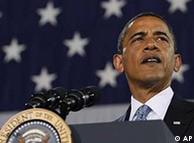
US President Barack Obama delivered a much-awaited address aimed at healing a rift with the Arab world in Cairo on Thursday, and spoke of a new beginning in relations between the US and the world's Muslims.

President Barack Obama delivered his address aimed at healing a rift with the Muslim world in Cairo on Thursday, with many Arabs unconvinced that his administration offers much hope of any real change in US policy towards the world's Muslims and the Middle East peace process.

Obama told the world's 1.5 billion Muslims that he had come to Cairo to "seek a new beginning between the United States and Muslims around the world; one based upon mutual interest and mutual respect; and one based upon the truth that America and Islam are not exclusive, and need not be in competition." Instead, he said, they overlap, and share common principles – principles of justice and progress; tolerance and the dignity of all human beings.

Obama said he was "proud to carry the goodwill of the American people, and a greeting of peace from Muslim communities in my country: al-salamu alaykum."

"Al-salamu alaykum" means "peace be upon you" in Arabic and is the traditional greeting for Muslims.

"We meet at a time of tension between the United States and Muslims around the world – tension rooted in historical forces that go beyond any current policy debate. The relationship between Islam and the West includes centuries of co-existence and cooperation, but also conflict and religious wars," the US president said in his address at Cairo University. "Violent extremists have exploited these tensions in a small but potent minority of Muslims. The attacks of September 11th, 2001 and the continued efforts of these extremists to engage in violence against civilians has led some in my country to view Islam as inevitably hostile not only to America and Western countries, but also to human rights," Obama said.

"So long as our relationship is defined by our differences, we will empower those who sow hatred rather than peace. This cycle of suspicion and discord must end," the US president said.

Tolerance a two-way street, says Obama

President Barack Obama Bildunterschrift: Großansicht des Bildes mit der Bildunterschrift: Obama said the US and Muslims should reject stereotypes

"I recognize that change cannot happen overnight. No single speech can eradicate years of mistrust, nor can I answer in the time that I have all the complex questions that brought us to this point. But I am convinced that in order to move forward, we must say openly the things we hold in our hearts, and that too often are said only behind closed doors. There must be a sustained effort to listen to each other; to learn from each other; to respect one another; and to seek common ground.

"I consider it part of my responsibility as president of the United States to fight against negative stereotypes of Islam wherever they appear," Obama added. "But that same principle must apply to Muslim perceptions of America. Just as Muslims do not fit a crude stereotype, America is not the crude stereotype of a self-interested empire.

"I know there are many - Muslim and non Muslim - who question whether we can forge this new beginning," he continued. "Some are eager to stoke the flames of division, and to stand in the way of progress. Some suggest that it isn't worth the effort - that we are fated to disagree, and civilizations are doomed to clash.

"There is so much fear, so much mistrust. But if we choose to be bound by the past, we will never move forward."

Afghanistan a war of necessity, Iraq a war of choice

Obama touched on the United States' military role around the world, saying that the war in Afghanistan was a war of necessity while Iraq was a war of choice.

Unidentified US Marines stay warm in sleeping bags near their guns at their Bildunterschrift: Großansicht des Bildes mit der Bildunterschrift: Obama said US troops could not be brought home from Afghanistan yet

He admitted that military power alone would not solve the problems in Afghanistan and Pakistan and outlining his plans for the withdrawal of troops from Iraq. "Make no mistake: we do not want to keep our troops in Afghanistan," he said. "We seek no military bases there. It is agonizing for America to lose our young men and women. It is costly and politically difficult to continue this conflict. We would gladly bring every single one of our troops home if we could be confident that there were not violent extremists in Afghanistan and Pakistan determined to kill as many Americans as they possibly can. But that is not yet the case.

"None of us should tolerate these extremists. They have killed in many countries. They have killed people of different faiths – more than any other, they have killed Muslims."

One of the most anticipated sections of the speech was that referring to the Israeli-Palestinian situation. Obama was even-handed with his words.

Obama on the Israeli-Palestinian situation

"America's strong bonds with Israel are well known. This bond is unbreakable. It is based upon cultural and historical ties, and the recognition that the aspiration for a Jewish homeland is rooted in a tragic history that cannot be denied.

"Threatening Israel with destruction – or repeating vile stereotypes about Jews – is deeply wrong, and only serves to evoke in the minds of Israelis the most painful of memories while preventing the peace that the people of this region deserve," he continued.

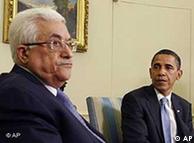
President Barack Obama, right, meets with Palestinian Authority President Mahmoud Abbas Bildunterschrift: Großansicht des Bildes mit der Bildunterschrift: Obama said Abbas and the Palestinians needed to build a stable government

"On the other hand, it is also undeniable that the Palestinian people – Muslims and Christians – have suffered in pursuit of a homeland. So let there be no doubt: the situation for the Palestinian people is intolerable. America will not turn our backs on the legitimate Palestinian aspiration for dignity, opportunity, and a state of their own."

He called on both sides to live up to obligations under the stalled "roadmap" for Middle East peace. "Israelis must acknowledge that just as Israel's right to exist cannot be denied, neither can Palestine's," he said.

"The United States does not accept the legitimacy of continued Israeli settlements. This construction violates previous agreements and undermines efforts to achieve peace. It is time for these settlements to stop."

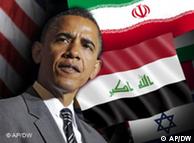
Iran has a responsibility to stop potential arms race

The US president also renewed his offer for dialogue with arch-US foe Iran after decades of Cold War-style discord.

"It will be hard to overcome decades of mistrust, but we will proceed with courage, rectitude and resolve," he said. "There will be many issues to discuss between our two countries, and we are willing to move forward without preconditions on the basis of mutual respect. But it is clear to all concerned that when it comes to nuclear weapons, we have reached a decisive point.

"This is not simply about America's interests. It is about preventing a nuclear arms race in the Middle East that could lead this region and the world down a hugely dangerous path."

24.6.09

U.S. Military announces cyber command - Digital Journal: Your News Network

U.S. Military announces cyber command - Digital Journal: Your News Network:

U.S. Military announces cyber command

By Bob Ewing.
Published 1 hour ago by Bob Ewing


The "cyber command" is designed to wage digital warfare and to bolster defenses against mounting threats to the military's computer networks.
Defense Secretary Robert Gates has formally established the command.

The first cyber command in the U.S. will begin operating in October and will operate under the U.S. Strategic Command.

"Cyber dominance" is now part of U.S. war doctrine as this announcement confirms. This development comes as alarm over the perceived threat posed by digital espionage coming from China, Russia and elsewhere grows .

U.S. officials say China has a sophisticated cyber warfare program and recent intrusions in the United States and elsewhere can be traced back to Chinese sources.

Lieutenant General Keith Alexander, the director of the super-secret National Security Agency (NSA), is anticipated to lead the command..

Alexander has described cyberspace as the new military frontier and could shape the future of national security, comparing it to sea or air power.

Not everyone agrees as some analysts have raised concerns a more aggresssive approach to cyber security could pose a possible threat to privacy and civil liberties as well as potential diplomatic dilemmas.

The command will streamline various cyber efforts across the armed forces and would not amount to a "militarization of cyberspace."

Fort Meade, Maryland is the likely location for the new command. The Pentagon will not be taking over security efforts for civilian networks from other government agencies.

The U.S. military relies on 15,000 networks and about seven million computers, with more than 100 foreign intelligence agencies trying to hack into U.S. networks.

Last week, Deputy Defense Secretary William Lynn said, "Our defense networks are constantly under attack."

"They are probed thousands of times a day. They are scanned millions of times a day. And the frequency and sophistication of attacks are increasing exponentially," he said.

Criminal gangs and teenage hackers pose potential threats and could act as cyber mercenaries to foreign governments, Lynn said.

Lynn referred to cyberattacks that shut down Georgia's government and commercial web sites during Russia's military incursion in 2008..

Cyber command would focus on security efforts along with offensive capabilities to ensure "freedom of action in cyberspace" for the United States.

The precise details of U.S. cyber military power remain secret. However, it could include technology capable of penetrating and jamming networks, including the classified Suter airborne system.

PresidentObama has made cyber security a top priority and has announced plans for a national cyber defense coordinator.

A recent White House policy review said that "cybersecurity risks pose some of the most serious economic and national security challenges of the 21st century."

The government is moving to step up efforts to protect sensitive civilian and military networks, however, Obama has promised privacy rights would be carefully safeguarded.
Vote It Up if you enjoy it!'});p.show();return false;">

16.6.09

Join a Delegation

Join a Delegation: "

Demand Immigration Detention Reform!

Congressional In-District Lobby Weeks, June 29th – July 5th

Detainee being shackled by guard
Detainee being shackled by guard © Steven Rubin

We need your help. Tens of thousands of individuals will be detained tonight, tomorrow, and the next day at an average cost of $95 per person, per day. Among them are survivors of torture and human trafficking, undocumented immigrants, asylum seekers, lawful permanent residents, and even U.S. citizens. The individuals are caught in a U.S. immigration detention system that is expensive, ineffective, and that denies basic human rights.

You can help fix it. Effective alternatives cost as little as $12 per day, and some commonsense measures will save money and help stop abuses against the more than 300,000 men, women and children detained each year.

A few members of Congress have stepped forward to lead the reform. With your help, leading a visit to your Representative or Senators, we'll press Congress to end human rights abuses in detention facilities in the US.

Amnesty International will provide you with the support and training you need to be an effective Delegation Leader. Serving as a delegation leader will take a time commitment of about 15 hours, which includes reading background materials, participating in our online training, meeting with members of your delegation and meeting with your elected officials' office some time during the workday between June 29th – July 5th.

» Sign up to lead a delegation
» Find a delegation to join
» Download your Resource Package

13.5.09

Recession Drains Social Security and Medicare

Published: May 12, 2009

WASHINGTON — Even as Congress hunted for ways to finance a major expansion of health insurance coverage, the Obama administration reported Tuesday that the financial condition of the two largest federal benefit programs, Medicare and Social Security, had deteriorated, in part because of the recession.

Skip to next paragraph

Blog

The Caucus
The Caucus

The latest on President Obama, the new administration and other news from Washington and around the nation. Join the discussion.

Doug Mills/The New York Times

Treasury Secretary Timothy F. Geithner, with, from left, Michael J. Astrue, the Social Security administrator, Kathleen Sebelius, the Health and Human Services secretary, and Labor Secretary Hilda L. Solis, discussed the financial status of benefit programs.

Readers' Comments

Readers shared their thoughts on this article.

As a result, the administration said, the Medicare fund that pays hospital bills for older Americans is expected to run out of money in 2017, two years sooner than projected last year. The Social Security trust fund will be exhausted in 2037, four years earlier than predicted, it said.

Spending on Social Security and Medicare totaled more than $1 trillion last year, accounting for more than one-third of the federal budget.

The fragility of the two programs is a concern not just for current beneficiaries, but also for future retirees, taxpayers and politicians. Lawmakers say they would never allow Medicare’s trust fund to run out of money. But beneficiaries could be required to pay higher premiums, co-payments and deductibles to help cover the costs.

The projected date of insolvency, a widely used measure of the benefit programs’ financial health, shows the immense difficulties Mr. Obama and Congress will face in trying to shore them up while also extending health coverage to millions of Americans.

The labor secretary, Hilda L. Solis, noted that 5.7 million jobs had been lost since the recession began in December 2007. With fewer people working, the government collects less in payroll taxes, a major source of financing for Medicare and Social Security.

A resumption of economic growth is not expected to close the financing gap. The trustees’ bleak projections already assume that the economy will begin to recover late this year.

The Treasury secretary, Timothy F. Geithner, said the only way to keep Medicare solvent was to “control runaway growth in both public and private health care expenditures.” And he said Mr. Obama intended to do that as part of his plan to guarantee access to health insurance for all Americans.

But if cost controls do not produce the expected savings, Congress is likely to find it difficult to preserve benefits without increasing taxes.

Just hours before the trustees of Medicare and Social Security issued their annual report, suggesting that the nation could not afford the programs it had, the Senate Finance Committee finished a hearing on how to pay for the expansion of health insurance coverage that Mr. Obama seeks.

Mr. Obama has said he does not want to finance expanded health coverage with more deficit spending. Rather, he says, Congress must find ways to offset the costs, so they do not add to the deficit over the next decade.

Federal deficits and debt are soaring because of the recession and federal efforts to shore up banks and other industries while trying to revive the economy with a huge infusion of federal spending.

“The financial outlook for the hospital insurance trust fund is significantly less favorable than projected in last year’s annual report,” the Medicare trustees said. “Actual payroll tax income in 2008 and projected future amounts are significantly lower than previously projected, due to lower levels of average wages and fewer covered workers.”

In coming years, the trustees said, Medicare spending will increase faster than either workers’ earnings or the economy over all.

The trustees predicted that, for the first time in more than three decades, Social Security recipients would not receive any increase in their benefits next year or in 2011. In 2012, they predicted, the cost-of-living adjustment will be 1.4 percent.

The updates are calculated under a statutory formula and reflect changes in the Consumer Price Index, which was unusually high last year because of energy prices.

If there is no cost-of-living adjustment for Social Security, about three-fourths of Medicare beneficiaries will not see any change in their basic premiums for Part B, which covers doctors’ services. The monthly premium, now $96.40, is usually deducted from Social Security checks, the main source of income for more than half of older Americans.

The trustees said that one-fourth of Medicare beneficiaries would face sharply higher premiums: about $104 next year and $120 in 2011. This group includes new Medicare beneficiaries and those with higher incomes (over about $85,000 a year for individuals and $170,000 for couples).

Seventy-five percent of beneficiaries will not pay any increase, so the remaining 25 percent have to pay more to keep the trust fund at the same level, Medicare officials said.

The aging of baby boomers will strain both Medicare and Social Security, but Medicare’s financial problems are more urgent.

The trustees predict a 30 percent increase in the number of Medicare beneficiaries in the coming decade, to 58.8 million in 2018, from 45.2 million last year.

But the projected increase in health costs and the use of medical care is a more significant factor in the growth of Medicare. The trustees predict that average Medicare spending per beneficiary will increase more than 50 percent, to $17,000 in 2018, from $11,000 last year.

Representative Pete Stark, the California Democrat who is chairman of the Ways and Means Subcommittee on Health, said the Medicare report “underscores the urgent need for health reform.”

19.4.09

Truly Amazing!!!

Scottish Singer's Audition Video Sets Online Record

Susan Boyle's Performance Viewed Over 66 Million Times In One Week


By Jose Antonio Vargas
Washington Post Staff Writer
Sunday, April 19, 2009; 7:29 AM

Susan Boyle is headed for the history books.

The online video of Boyle's performance in the reality show "Britain's Got Talent" has set the record for the number of views in a week -- and shows no sign of stopping.

According to Visible Measures, which tracks videos from YouTube, MySpace and other video-sharing sites, Boyle's audition has generated 66.3 million views. On YouTube alone, it's been viewed more than 30 million times. The 7-minute video that was posted on YouTube last Saturday and then widely circulated online easily eclipsed more high-profile videos that have been around for months. Tina Fey's impersonation of Sarah Palin has clocked in 34.2 million views, said the folks at Visible Measures, while President Obama's victory speech on election night has generated 18.5 million views. In less than a week, Boyle topped them.

But it's not just online video where Boyle, the unassuming woman from a tiny Scottish town, has dominated. Over the weekend, her Facebook fan page was flooded with comments, at some points adding hundreds of new members within a minute. The page listed 150,000 members on 1 p.m. Friday. It grew to 850,000 by 6 a.m. Sunday. Her Wikipedia entry has attracted nearly half a million page views since it was created last Sunday.

ad_icon

Indeed, the Internet is her stage, and the 47-year-old who has said she's never heard of YouTube is the Web's hottest entertainer. "She's really the world's singer right now," said Julie Supan, a YouTube spokesperson who in her four years at the company cannot remember a video raking in this many views in such a period of time.

One view at a time, Boyle's audience is proving that the social Web -- where users aren't just mere viewers but also distributers -- makes the digital world feel smaller and more connected. And her global popularity is a testament that the marriage between old media (her performance first aired on Britisn television) and new media (it then made its way to YouTube, Twitter and Facebook) is broadening the reach of all media, from one channel to the next, one person at a time.

As a result, at any given moment, someone is passing along Boyle online.

Photobucket